
Finance Operations
9 Best Deduction Management Software Tools for 2026
Compare the 9 best deduction management software tools for 2026: which ones log and route deductions, and which collect the backup and dispute them.
- Von
-
 Filip Rejmus
- Veröffentlicht
- Lesezeit
- 17 Min. Lesezeit
The payment from a grocery chain arrives several thousand dollars short. The remittance lists a promotion billback, two shortage claims and a late delivery fine, each with a retailer code and no explanation. The backup is in the retailer's portal, the proof of delivery is with the carrier, and the promotion agreement is in a sales manager's inbox. The dispute window is already running.
Most deduction management software gives your AR team a worklist. It logs each deduction, assigns a reason code and routes it to an owner. The research stays with a person. A newer group of tools sends an agent to work each deduction: collect the backup from the remittance, the retailer portal, the proof of delivery and the promotion agreement, decide whether the deduction is valid under your terms, and prepare or file the dispute.
There is a second split. Some tools are built around the portals and codes of specific retailers such as Walmart or Amazon. Others cover every customer, including the distributors and regional chains that send a claim as a PDF attached to an email.
This post covers the best deduction management software for 2026: what each tool does, who it is built for, and where it sits between logging deductions and working them.
Best Deduction Management Software at a Glance
| Tool | Best for | Standout |
|---|---|---|
| cloudsquid | AR teams at consumer goods companies and manufacturers whose deductions arrive in a shared mailbox | An agent per deduction gathers the backup, checks it against order, delivery and agreed terms, and prepares the write-off approval or the dispute |
| HighRadius | Enterprise and mid-market AR teams with high deduction volumes across several ERPs | AI agents for portal claim download, validity prediction and trade promotion matching inside an order-to-cash suite |
| SPS Commerce Revenue Recovery | Suppliers whose deductions come from major US retailers and distributors | Retailer-specific dispute workflows backed by retailer specialists |
| iNymbus | Manufacturers, distributors and suppliers with high claim counts at large retailers | Cloud robots that retrieve deductions, file disputes and reconcile repayments every day |
| Glimpse | CPG brands selling through retailers and distributors such as UNFI and KeHE | AI agents that validate and dispute deductions, overseen by Glimpse's own experts |
| Vividly | CPG brands that want trade promotion planning and deductions in one system | Matches each deduction line to the promotion it belongs to |
| Promomash | Emerging and mid-size CPG brands that want deductions handled as a service | A specialist team that codes, validates and disputes for the brand |
| Esker | Finance and customer service teams that want deductions inside an order-to-cash suite | AI capture and matching of claims with a shared approve, settle or contest workflow |
| Serrala | SAP-centric companies in deduction-intensive industries | A disputes and deductions cockpit embedded in SAP S/4HANA and ECC |
1. cloudsquid: AI Agents That Work Each Deduction in the AR Mailbox
cloudsquid is an autonomous inbox for finance and operations teams at companies that make, move and sell physical products. For deductions, that inbox is the AR mailbox, where remittances, deduction notices and customer emails about short pays arrive. Each message becomes a task with its own agent.
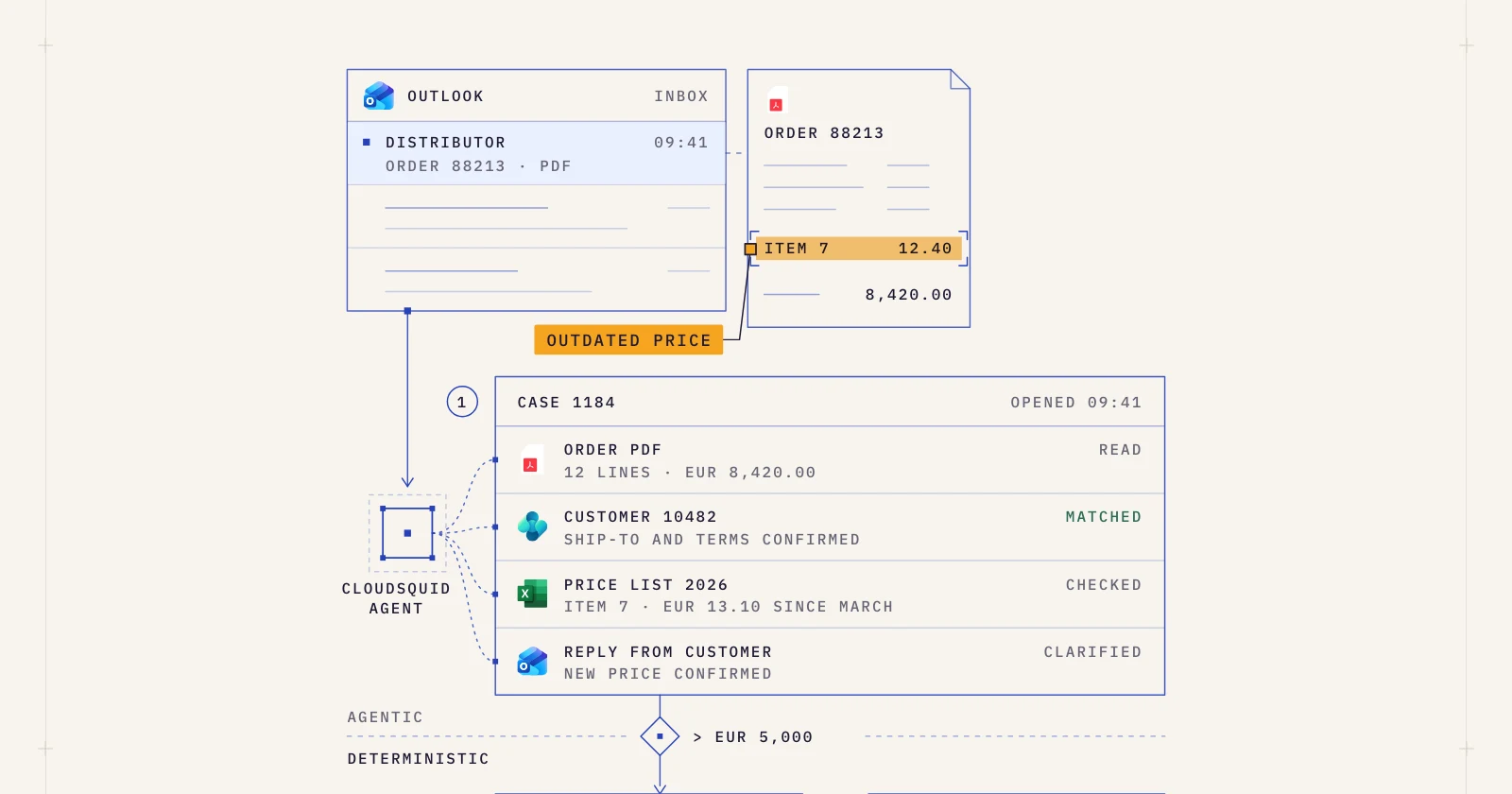
The agent does the research an AR analyst would do. It reads the remittance or the deduction notice, gathers the backup, and checks the deduction against the order, the delivery and the agreed terms in your own records. A valid deduction is marked for write-off approval. An invalid one gets a prepared dispute. Only exceptions reach the team, with the evidence attached.
One inbox takes in every channel: email, PDFs, EDI, customer and supplier portals, Teams. A national retailer posts backup to a portal, a regional distributor sends a debit memo as a PDF, and both become tasks in the same place.
What makes cloudsquid different for deduction management:
Agents learn the process from your SOPs, files, email and ERP history. The rules are yours: approval limits, thresholds, escalation paths and what agents may do alone. They are versioned and auditable, and approvals stay with people where the team wants them. Every case keeps a full evidence trail. When an agent cannot resolve a case, the team gets it with the evidence attached, and the resolution becomes a rule so the same exception does not come back.
cloudsquid works on top of the existing ERP (SAP, Oracle NetSuite, Microsoft Dynamics 365, Workday, Infor) and does not replace it. People keep working in Outlook, Teams or the cloudsquid workspace.
cloudsquid is not a trade promotion management system, a recovery service built around one retailer's portal, or a full AR suite. It is the agent layer that works the mailbox. Payments and deductions is one of six processes on the same platform, so a team can start with trade deductions and add customer orders or supplier invoices later without buying another tool.
A national CPG brand recovered $1.5M per year in invalid deductions, and a specialty foods manufacturer cut the average time to resolve a dispute from 45 to 14 days. More are on the customer results page.
Who cloudsquid is built for:
AR teams at consumer goods companies and manufacturers where deductions arrive from many customers in many formats and analysts spend their days collecting backup. There is no integration project to start: the team forwards the mailbox and shares SOPs, sample cases and an ERP export on day 1, and agents work the inbox in week 2. cloudsquid is ISO 27001:2022 certified, with EU data residency.
2. HighRadius: Deduction Agents Inside an Enterprise Order-to-Cash Suite
HighRadius, based in Houston, sells a finance platform for the office of the CFO. Deductions Management is one module of its order-to-cash suite, next to collections, cash application and credit management. The company describes it as built for enterprises managing high deduction volumes across multiple ERPs, with a mid-market offering as well.
Key capabilities:
- Claim capture: Agents retrieve claim documents from customer portals such as Amazon and Kroger and from claim emails.
- Validity predictor: AI confidence scoring predicts whether a deduction is valid and prioritizes the analyst worklist.
- Trade promotion matching: Integrates with SAP TPM and other promotion systems to match trade deductions at item and SKU level.
- Shortage validation: Carrier proofs of delivery are aggregated and linked to shortage claims.
HighRadius's standout capability: Backup collection at scale
HighRadius states that its embedded RPA bots integrate with more than 1,000 customer and carrier websites to collect backup documents, and that the product improves net recovery by up to 30%. Analysts can flag an invalid deduction and submit the dispute in a single click, with pre-configured denial correspondence. The product integrates with SAP, Oracle, Microsoft Dynamics and NetSuite.
Who HighRadius is built for:
Finance, AR and shared services teams that handle complex customer claims in volume. It suits buyers who are choosing an order-to-cash platform and want deduction recovery to be part of it.
3. SPS Commerce Revenue Recovery: Retailer-Specific Deduction Recovery, Formerly SupplyPike
SPS Commerce is a retail network company headquartered in Minneapolis. It acquired SupplyPike, an invoice deduction management product, effective August 1, 2024, and Carbon6 Technologies, a maker of tools for Amazon sellers, in February 2025. The product is now sold as SPS Revenue Recovery. On June 30, 2026, SPS announced it had sold the part of the business serving Amazon third-party sellers (3P) and kept the first-party (1P) revenue recovery business.
Key capabilities:
- Retailer workflows: Dedicated workflows for Walmart, Amazon, Kroger, Target, CVS, Walgreens, Lowe's, Home Depot, Kohl's, UNFI, KeHE and more, aligned to each retailer's codes, documentation and dispute process.
- Document Explorer: Shipping documents are pulled from more than 300 carriers into one place, and compliance issues such as unsigned deliveries or mismatched orders are surfaced.
- Automated disputes: The software identifies invalid deductions, gathers the documentation and handles the disputing.
- Root cause analysis: Recurring causes and operational trends are surfaced to reduce future valid deductions.
SPS Commerce's standout capability: Retailer-specific depth with specialists
Each supported retailer has its own workflow, and SPS adds dedicated retailer specialists who stay involved after onboarding and analyze root causes and denied disputes. The company states it has recovered more than $2B for supplier brands.
Who SPS Commerce Revenue Recovery is built for:
Suppliers whose chargeback and shortage disputes are concentrated at the large US retailers and distributors on SPS's list, and who want software plus expert support for those accounts. Compare that list with your own customer list before you evaluate.
4. iNymbus: Robotic Dispute Filing for High Claim Volumes
iNymbus uses cloud robotic automation: software robots do the portal work an analyst would otherwise do by hand. According to the company, the robots retrieve new deductions, file disputes and reconcile repayments every day. Invoices, proofs of delivery, bills of lading and EDI records come from the supplier's ERP, EDI provider, retailer portals and email.
Key capabilities:
- Retailer coverage: iNymbus states it files disputes with more than 52 retailers and names Walmart, Amazon, Target, CVS, Walgreens and Home Depot.
- Dispute packets: Claim documentation is retrieved, packaged and uploaded to the retailer's portal, with the required descriptions filled in.
- Repayment reconciliation: Repayments are reconciled, with root causes reported by retailer, code, SKU and distribution center.
- Freight claims and returns variance: Separate automations cover freight claims with shippers and returns variances.
iNymbus's standout capability: Cost per claim
The company states an 80% lower cost per claim and processing up to 30 times faster than manual work. A claim that costs more to research than it is worth becomes viable when a robot files it. iNymbus says most suppliers start recovering within 6 to 8 weeks, and that it pulls data from SAP, Oracle, NetSuite and Dynamics.
Who iNymbus is built for:
Manufacturers, distributors and suppliers with a high count of repetitive claims at large retailers, where the bottleneck is the manual upload to each portal.
5. Glimpse: AI Agents for CPG Deductions Across Retailers and Distributors
Glimpse describes its product as AI deductions management and revenue recovery software for CPG brands. The brand grants access to its retailer portals. Glimpse pulls the deduction data, its AI agents validate deductions across retail channels, and disputes are started for both historical and live deductions. The company says its human experts oversee accuracy and compliance and track each dispute through resolution.
Key capabilities:
- Retailer and distributor coverage: The site shows Walmart, Sam's Club, Amazon, Kroger, Walgreens, KeHE and UNFI and states integrations with more than 20 retailers.
- Shortage agent: Reviews each shortage claim against freight, shipping and delivery data.
- Promo agent: Checks each promotional deduction against the approved promotion calendar and deal data.
- Cash application and accounting: Maps remittances to invoices and integrates with QuickBooks and NetSuite.
Glimpse's standout capability: Agents plus experts on every deduction
In its guide to UNFI deductions, Glimpse states that invalid deductions are disputed automatically with no minimum dollar threshold, which is useful when a distributor sends many small claims. The company says it is trusted by more than 200 consumer brands and that onboarding takes 45 days.
Who Glimpse is built for:
CPG brands that sell through large retailers and distributors, run QuickBooks or NetSuite, and want the research and disputing taken off the finance team. It is CPG deductions software by design.
6. Vividly: Trade Promotion Management With Deductions Attached
Vividly is trade promotion and deduction management software for CPG brands. Sales teams plan and forecast trade spend in Vividly, and finance reconciles the deductions those promotions produce in the same system. A promotional deduction can only be judged against the deal that was agreed, and in Vividly the deal is already there.
Key capabilities:
- Scanning and matching: Vividly says it builds the invoice headers, scans every line and matches each deduction to the promotion it belongs to.
- Invalid claim detection: Automated detection catches invalid claims, and rules assign disputes that need human review to the right team member.
- Dispute service: The company offers a dispute service for invalid deductions and chargebacks.
- Integrations: The integrations page lists retailers such as Walmart, Target and Kroger, distributors such as UNFI and KeHE, and foodservice distributors such as US Foods. Vividly describes itself as ERP agnostic.
Vividly's standout capability: Deductions checked against the trade plan
Because promotions and deductions live in one system, each deduction line is checked against the deal the sales team planned there. Vividly states that brands using it to manage deductions see a 90% reduction in deduction processing labor.
Who Vividly is built for:
CPG brands where most deductions are trade spend and where sales and finance want one source for promotions. Vividly lists tiers from emerging brands (up to $50M) to enterprise (above $2B).
7. Promomash: Deductions as a Managed Service for CPG Brands
Promomash has worked with CPG brands since 2015 in three areas: trade promotion management, deduction management and field marketing. Its deduction offering, CPGenius Deductions, combines AI automation with what the company calls expert humans in the loop.
The model is closer to a service than a worklist. The brand submits its deduction chargebacks, checks and invoices. After the claims are reviewed for validity, the Promomash deductions team disputes the invalid ones.
Key capabilities:
- Document capture: Deduction documents are digitally captured and converted into a structured data set.
- Coding: A proprietary catalog of category codes that spans major retailers and distributors.
- Promotion matching: Deductions are compared with the promotions and the documentation the brand provides.
- Dashboard: Real-time status of all deductions, with drill-down reporting on spend.
Promomash's standout capability: A specialist team included
A dedicated team of deduction specialists assists from coding and validation to dispute and recovery. Promomash prices the service by monthly deduction invoice volume, on request, with a one-year commitment. The company states that onboarding typically takes two to four months and that its clients range from $1M to $500M.
Who Promomash is built for:
Emerging and mid-size CPG brands without a dedicated deductions analyst, which would rather hand over the documents and get coded, validated and disputed deductions back.
8. Esker: Claims and Deductions in a Global Order-to-Cash Suite
Esker is headquartered in Lyon, France, with US headquarters in Madison, Wisconsin. Since its delisting in March 2025 it has been controlled by Bridgepoint in partnership with General Atlantic and the management shareholders. Its Claims & Deductions product, for trade and non-trade claims, belongs to an order-to-cash suite that also covers order management, invoice delivery, cash application and collections.
Key capabilities:
- Multi-channel intake: Claims, deductions and supporting documents are collected from emails, EDI, remittances, short-pay notices and customer portals.
- AI data capture: Esker Synergy AI extracts header and line-level information from spreadsheets, EDI files, PDFs and emails.
- Matching: Claims are matched against customer, invoice, product and promotion data.
- Collaborative resolution: Teams approve, partially settle or contest claims, with routing by claim type, amount and business rules, and dashboards for days deductions outstanding (DDO) and aging.
Esker's standout capability: One case shared by finance, service and sales
Internal and customer conversations stay tied to the same case, with a complete history of documents, decisions and resolution activity. Esker says its AI gives transparent recommendations while human oversight guides the final decisions. Among the results on its product page, Esker lists an 80% cut in deduction management time.
Who Esker is built for:
Finance and customer service teams, in Europe and the US, that want deductions handled inside an order-to-cash platform with a person approving each outcome. Esker's launch announcement named food, beverage and consumer goods manufacturers and distributors as the companies these claims typically affect.
9. Serrala: Disputes and Deductions Embedded in SAP
Serrala is headquartered in Hamburg and reports more than 2,800 customers globally. Its Disputes and Deductions product comes in two forms: embedded in SAP, and as a cloud application that runs alongside other ERPs. Both are available standalone. It is the most direct example on this list of the case management model: one cockpit, standardized reason codes and standardized workflows across regions.
Key capabilities:
- Central cockpit and reason codes: One view of every case inside SAP, each classified against a standardized, customizable set of reason codes that drives routing, reporting and root cause analysis.
- Debit note capture: Debit notes and deduction data are captured and processed automatically.
- SAP coverage: Supports SAP S/4HANA and ECC. Serrala describes the product as clean-core compliant, with no separate system to maintain.
- Cloud version: Captures cases from multiple channels, assigns each an owner, and lets customers submit and track disputes themselves. Serrala lists NetSuite, Microsoft Dynamics, Sage, Epicor and IFS among the ERPs.
Serrala's standout capability: Native to SAP
For a company that runs AR in SAP, cases are handled inside the system the team already works in, and globally set policies apply consistently across regions and teams. The cloud version adds root cause analytics on pricing, promotions, deliveries and customer agreements.
Who Serrala is built for:
Mid-market to enterprise companies in deduction-intensive industries, in particular SAP customers handling recurring disputes, deductions or short payments.
How to Choose the Right Deduction Management Software
These tools solve different problems. Answer these questions about your own deductions first.
1. Is your problem tracking deductions or working them?
If deductions get lost, sit without an owner or lack reason codes, you need case management first. Serrala, Esker and HighRadius give you that. If the queue is in order and analysts still cannot keep up, the bottleneck is research and disputing. Look at the tools that do that work: cloudsquid, Glimpse, iNymbus, SPS Commerce Revenue Recovery and the agents in HighRadius.
2. How concentrated are your deductions?
If a few large retailers account for most of the dollars, retail deduction management tools built around those retailers are the direct route: SPS Commerce Revenue Recovery, iNymbus and Glimpse. If deductions come from hundreds of customers, many of them by email or PDF, you need a tool that covers every customer: cloudsquid, Esker, HighRadius or Serrala.
3. Are most of your deductions trade promotions?
A trade deduction can only be validated against the promotion that was agreed. If promotion planning itself is the gap, Vividly and Promomash put the plan and the deductions in one system. If the plan already lives elsewhere, pick trade deduction software that reads it where it is. HighRadius integrates with SAP TPM and other promotion systems, and cloudsquid checks each deduction against the agreed terms in your own records.
4. Do you want software, a service, or agents your team governs?
Promomash and SPS Commerce add specialists, and Glimpse pairs its agents with its own experts. That suits lean finance teams. With cloudsquid, agents do the work and your team sets the rules, the approval limits and what agents may do alone. If your dispute management has to stand up to an audit, ask each vendor to show the evidence trail for one closed case.
5. What do your ERP and your timeline allow?
SAP-centric groups should look at Serrala and HighRadius. Stated timelines range from two weeks (cloudsquid) to two to four months (Promomash). For an order-to-cash suite, ask the vendor for a timeline for your ERP and scope.
What Good Deduction Management Looks Like in Practice
A good process starts when the remittance arrives, long before the aging report is reviewed. The short pay is identified at cash application, split into its deduction lines and given an owner the same day.
Next comes the backup. For a shortage, that is the proof of delivery and the bill of lading. For a promotion billback, it is the agreement, the promotion dates and the quantities. For a compliance fine, it is the routing guide and the shipment data. Collecting these documents by hand is slow, and this step separates a worklist from a tool that works the deduction.
Then the decision. A valid deduction is coded and sent for write-off approval within the limits the team has set. An invalid one becomes a dispute with the evidence attached, in the format the customer requires and inside the customer's dispute window.
Small deductions get the same treatment. A write-off threshold exists because research by hand costs more than a small claim is worth. When an agent or a robot does the research, the threshold can come down.
Last, the result goes back to the source. Recurring shortages at one distribution center, a promotion deducted twice, a price file that is out of date: deduction data is feedback for sales, logistics and pricing.
Frequently Asked Questions
What is deduction management software? Deduction management software helps a supplier identify, research, resolve and recover the amounts customers subtract from invoice payments. It captures deductions from remittances and customer claims, codes them by reason and tracks each one to resolution. Newer tools use agents or robots to collect the backup and prepare the dispute.
What is the difference between a deduction, a short pay and a chargeback? A short pay is a payment that arrives lower than the invoiced amount. A deduction is the amount withheld together with the reason given for it, such as a shortage, a promotion or a price difference. In retail, a chargeback is a deduction the retailer takes as a fee or penalty, often for a compliance violation.
How is deduction management different from trade promotion management? Trade promotion management plans and tracks the promotions a brand funds at its customers. Deduction management deals with what customers subtract from payments: promotions, but also shortages, damages, pricing, returns and compliance fines. Vividly and Promomash combine the two for CPG brands.
Do I need deduction software if my ERP already tracks disputes? An ERP records the deduction as an open item and can track a dispute case. The research usually happens outside it: collecting backup from a retailer portal, reading a remittance PDF, checking the claim against a promotion agreement. If analysts spend their days on that research, a tool that works on top of the ERP closes the gap. cloudsquid, for example, works on top of SAP, Oracle NetSuite, Microsoft Dynamics 365, Workday and Infor.
How long does it take to implement deduction management software? Vendor statements vary with the approach. cloudsquid is live in two weeks. Glimpse states onboarding in 45 days, iNymbus says most suppliers start recovering within 6 to 8 weeks, and Promomash states two to four months. Suite projects depend on scope.
What ROI can I expect from deduction recovery? The return comes from three places: invalid deductions recovered, analyst hours saved on research, and fewer valid deductions once root causes are fixed. To estimate it, take one year of deductions, the share you write off without review today, and the share of disputes you win. For a worked example, read how a mid-market CPG brand recovers trade-deduction revenue, or book a demo to see agents work an AR mailbox.
Related Comparisons
Über den Autor
Co-founder & CPO, Cloudsquid
Filip Rejmus, co-founder and Chief Product Officer at cloudsquid, is building infrastructure to help companies manage, scale, and optimize AI workflows. With a background spanning software engineering, data automation, and product strategy, he bridges the gap between AI research and building useful, friendly Products.Before founding Cloudsquid, Filip worked in engineering and data roles at Taktile, SoundHound, and Uber, and contributed to open-source projects through Google Summer of Code. He studied Computer Science at TU Berlin with additional coursework in Quantitative Finance at TU Delft and Computer Graphics at UC Santa Barbara.
Weiterlesen
Weitere Beiträge für Ihr Team.
Finance Operations 17 Min. Lesezeit
9 Best Sales Order Automation Software Tools for 2026
Artikel lesen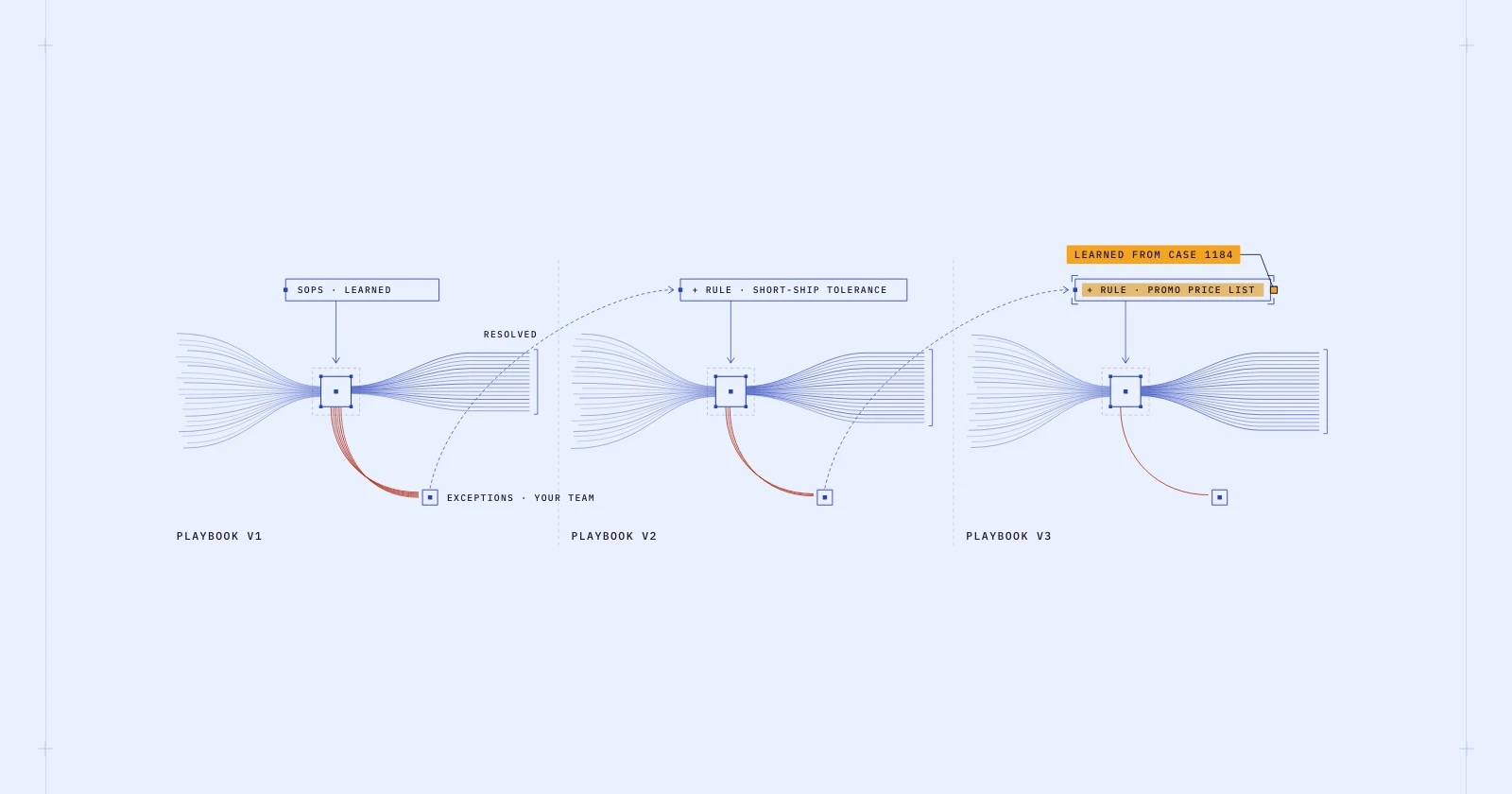
Finance Operations 17 Min. Lesezeit
9 Best AI Agents for Finance Operations in 2026
Artikel lesen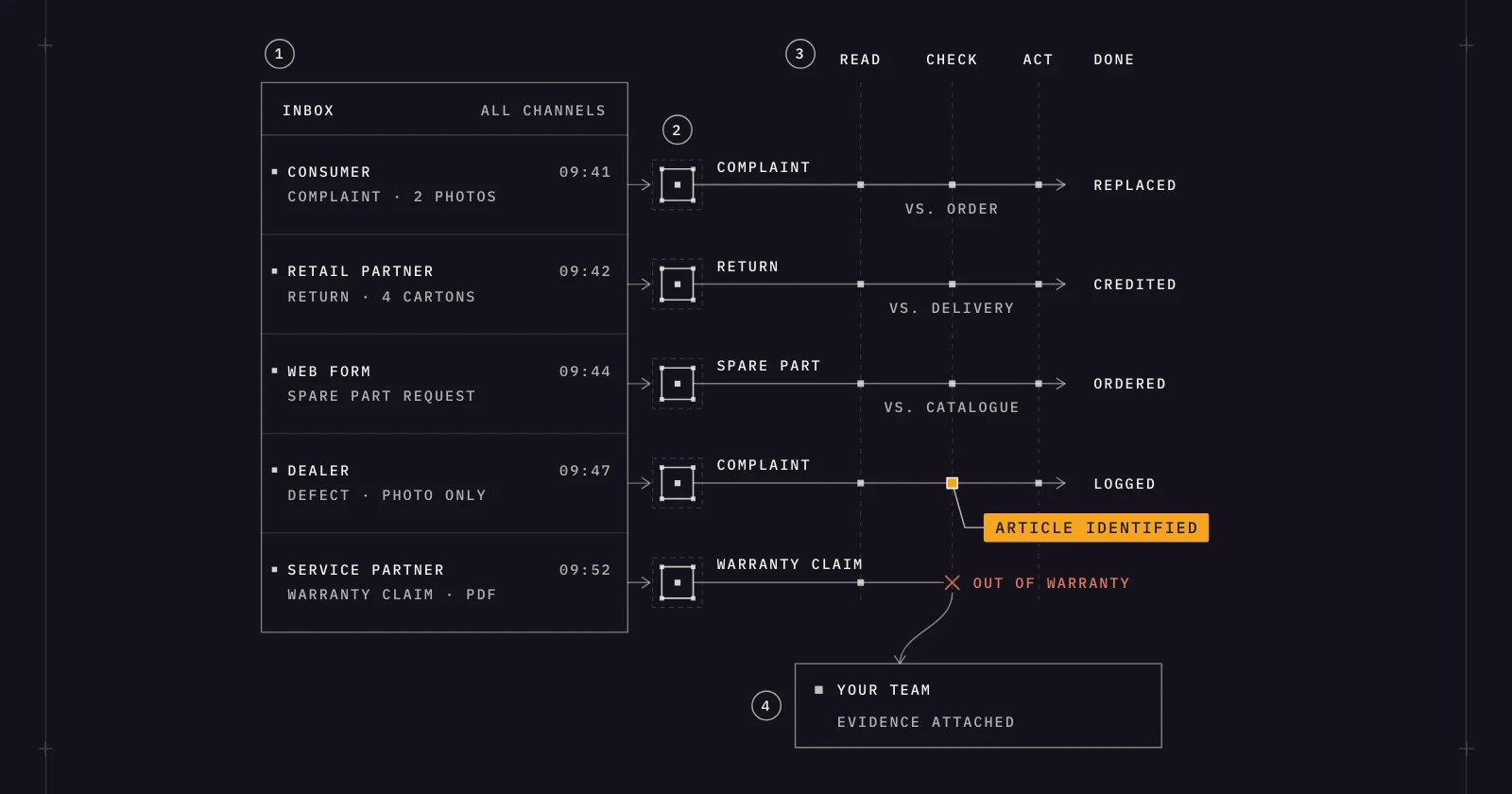
Finance Operations 17 Min. Lesezeit
9 Best B2B Customer Service Automation Tools for Manufacturers and Distributors in 2026
Artikel lesenNächster Schritt
Automatisieren Sie den Workflow hinter diesem Artikel.
Bringen Sie Ihre Dateien und Regeln mit. Cloudsquid setzt daraus in wenigen Wochen einen prüfbaren KI-Workflow um.