
Finance Operations
9 Best Account Reconciliation Software Tools for 2026
Compare 9 account reconciliation software tools for 2026: close suites, matching engines, supplier statement reconciliation and AI agents, and who each fits.
- Von
-
 Filip Rejmus
- Veröffentlicht
- Lesezeit
- 17 Min. Lesezeit
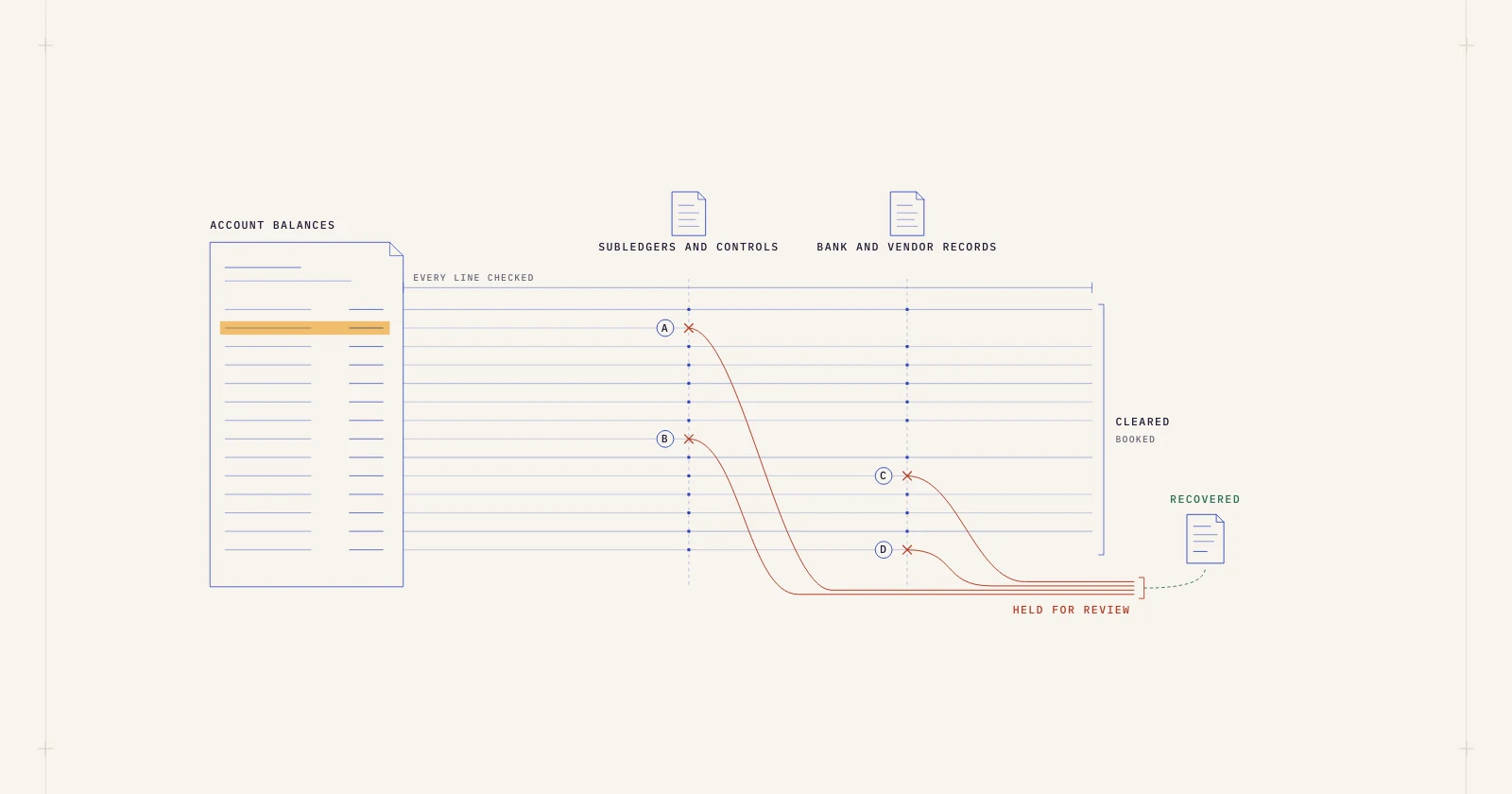
It is day three of the close. The bank accounts tie out and the matching rules have cleared most of the payables ledger. What is left is a supplier statement that lists 64 open invoices where your ledger shows 61, a credit note nobody can find, and a balance that is off by an amount that matches nothing.
That remainder is where reconciliation time goes. Matching the transactions that match is largely a solved problem. Explaining the difference that is left still means a person opening the mailbox, pulling the invoice or the proof of delivery, emailing the supplier for the missing document and working out the correcting entry.
Two distinctions matter when you compare these tools. The first is between matching engines with a close checklist, which match what matches and track who signed off, and agents that explain the difference that is left. The second is between general ledger and bank reconciliation suites, which live inside the month-end close, and statement reconciliation against suppliers and customers, which lives in accounts payable and receivable.
This post covers nine account reconciliation software tools for 2026: what each one does, who it is built for, and which side of those two lines it sits on.
Best Account Reconciliation Software at a Glance
| Tool | Best for | Standout |
|---|---|---|
| cloudsquid | Finance teams at manufacturers, distributors and consumer goods companies with statements and differences arriving in a mailbox | Agents reconcile supplier and customer statements against the ledger and trace each difference to its source document |
| BlackLine | Finance organizations that run reconciliation as a formal control, including companies on SAP | Auto-certification, transaction matching and the Verity Prepare agent |
| Trintech | Large enterprises (Cadency) and mid-market finance teams (Adra) | Two products sized to the organization, plus high-volume operational matching |
| FloQast | Accounting teams that want reconciliations in the same workflow as the close checklist | Preparer and reviewer sign-off, with every amount that does not tie tracked as an owned item |
| HighRadius | Large and mid-sized organizations that want reconciliation inside a record-to-report suite | AI agents per reconciliation type, with approved journals posted to the ERP |
| OneStream | Enterprises that run close and consolidation on OneStream | Reconciliations on the same data as consolidation and reporting |
| Numeric | Growing accounting teams on NetSuite, Workday, Sage Intacct, Xero or QuickBooks Online | Transaction-level data and alerts when a reconciled account moves out of balance |
| Xelix | Accounts payable teams reconciling supplier statements at scale | Requests statements, reads any format and flags missing invoices and credits |
| Basware | Accounts payable teams, including Basware AP Automation customers | A status for every statement line and a supplier portal for statements and queries |
1. cloudsquid: AI Agents That Explain the Difference Left After Matching
cloudsquid is an autonomous inbox for finance and operations teams at companies that make, move and sell physical products. For reconciliation, it starts where the work arrives: the finance mailbox. A supplier sends an account statement as a PDF or an Excel file. A customer sends a statement that disagrees with your receivables ledger. Each message becomes a task with its own AI agent.
The agent reads the statement and reconciles it against the ledger. Then it works on what does not match. It traces the open item to the source document, asks for a document that is missing, and proposes the correcting entry. Master data problems behind a difference, such as duplicate vendor records or wrong VAT IDs, are flagged. What the agent cannot explain goes to the team with the evidence attached.
cloudsquid is not a close management suite. It does not replace the close checklist, the account certification or the sign-off workflow that the suites below provide. It works on top of the ERP and next to those tools, on the part of reconciliation that consists of documents, email and follow-up.
What makes cloudsquid different for account reconciliation:
Agents learn the process from the company's SOPs, files, email and ERP history. The team sets the rules, thresholds and approval limits, which are versioned and auditable, and decides what an agent may do alone. An entry above the limit waits for a person's approval in Outlook, Teams or the cloudsquid workspace. When someone resolves an exception, the resolution becomes a rule, so the same difference does not come back next month. Every case keeps a full evidence trail.
Two published results show how much money can sit in unexplained differences. A construction wholesaler surfaced $730K in vendor reconciliation with 90% less manual effort. At a regional foodservice distributor, $250K per year in discrepancies is caught before payment. More results are on the customer impact page.
Who cloudsquid is built for:
Finance teams at manufacturers, distributors, wholesalers and consumer goods companies where statements pile up in a shared mailbox and only the largest accounts get reconciled. cloudsquid connects to SAP, Oracle NetSuite, Microsoft Dynamics 365, Workday and Infor. There is no integration project to start: the team forwards the mailbox and shares SOPs, sample cases and an ERP export, and agents work the inbox in week two. The close and reconciliation page shows a statement case from start to finish.
2. BlackLine: Enterprise Account Reconciliation With Auto-Certification
BlackLine appears in nearly every comparison of account reconciliation software. Its Account Reconciliations product standardizes and automates the reconciliation process, and its Transaction Matching product handles high-volume matching. The company presents both as part of the BlackLine Agentic Financial Operations Platform, with an AI layer called Verity.
Key capabilities:
- Account reconciliations: Reconciliation activities and supporting documents sit in one workspace, with real-time status on a central dashboard.
- Auto-certification: Low-risk account reconciliations are certified automatically based on pre-defined criteria.
- Transaction Matching: Configurable rules match large volumes, including one-to-many and many-to-many cases, and flag exceptions.
- Verity Prepare: An AI agent that prepares reconciliations and drafts reconciling items for final human review.
- SAP fit: BlackLine states that it is the only SAP Solution Extension partner in the financial close and intercompany space, and that it serves more than 1,200 SAP customers.
BlackLine's standout capability: Control depth for audited reconciliations
BlackLine treats reconciliation as a key control. Its audit trail documents who did what, including every human and AI-driven action, and matching results can create reconciling items and journal entries on the account reconciliation itself. That link between matching, certification and evidence is what the product is known for.
Who BlackLine is built for:
BlackLine is built for finance organizations that run reconciliation as a formal control: many balance sheet accounts, several entities and auditors who test the process. Companies on SAP will often meet it through SAP, which includes BlackLine in its record-to-report offering, according to BlackLine.
3. Trintech: Cadency for Large Enterprises, Adra for Mid-Market Teams
Trintech sells two reconciliation and close products. Cadency is its financial close platform for large enterprises and covers the period-end close, reconciliation certification, matching, journal entries, intercompany accounting and compliance. Adra is its suite for mid-market finance teams, which Trintech describes as quick to implement. The company says its AI agents take on reconciliations, matching and journal entries while the team keeps full oversight.
Key capabilities:
- Cadency: Close, reconciliation certification, matching, journal entry, intercompany and compliance on one platform.
- Adra Matcher: Multi-way transaction matching against bank statements, card statements, point of sale and other sources, so accountants handle only the exceptions.
- Adra Balancer: Balance sheet reconciliations that take in matched transactions and can reconcile accounts automatically within variance thresholds.
- Adra Task Manager: Centralized close checklists and documents.
- ERP connectors: Pre-built Cadency connectors for SAP (SAP-certified), Oracle ERPs and NetSuite.
Trintech's standout capability: High-volume operational matching
Beyond the balance sheet, Trintech reconciles operational data at volume: bank activity against the general ledger, card settlements against point-of-sale activity, cash clearing accounts. The company states that its operational reconciliation offering can process more than 150 million transactions per day.
Who Trintech is built for:
Cadency is built for large enterprises, which Trintech describes as complex, public and global organizations. Adra is built for mid-market teams that want matching, balance sheet reconciliation and a close checklist in one suite.
4. FloQast: Reconciliations Managed From Prep to Sign-Off
FloQast is a close management and accounting automation platform that describes its software as "AI built by accountants for accountants". Its Account Reconciliations product manages each reconciliation from preparation to sign-off: it pulls the account balance from the ERP, stores the support next to it (bank statements, subledger detail, schedules or spreadsheets) and checks that every account is done before the close.
Key capabilities:
- Reconciling items: Anything that does not tie within the materiality threshold becomes a tracked item with an owner, a description and an age.
- Review and sign-off: Each reconciliation gets a preparer, a reviewer and a due date, and strict sign-off keeps the two roles separate.
- Automation: AI Transaction Matching for high-volume lists, plus automated amortization and depreciation schedules and subledger-to-GL reconciliations.
- AI agents: Agents run a process the team describes in plain language, and FloQast states that nothing posts to the books without human approval.
FloQast's standout capability: Completeness and sign-off discipline
A completeness check confirms that every account has been reconciled. Auto sign-off handles unchanged and zero-balance accounts, audit reports track each change, and alerts by email, Slack or Teams tell owners about imbalances and due dates.
Who FloQast is built for:
FloQast is built for accounting teams that want reconciliations in the same workflow as the close checklist, with clear preparer and reviewer roles. Its site shows integrations with Workday, Oracle NetSuite, SAP, Oracle, Sage Intacct, Xero and QuickBooks, among others.
5. HighRadius: AI Agents for Reconciliation Inside a Record-to-Report Suite
HighRadius sells account reconciliation as part of a record-to-report suite that also covers financial close management, intercompany, consolidation and reporting. The software pulls transactions from banks, ERPs, payment platforms and subledgers into one reconciliation engine, matches them, and generates journal entries for what needs correcting. The company states that it integrates with more than 50 ERPs, and names SAP S/4HANA, Oracle Fusion, Microsoft Dynamics 365 and NetSuite.
Key capabilities:
- Transaction matching: Configurable logic on amount, date and reference, plus AI that discovers matching rules from historical behavior.
- Named agents: Separate agents for bank, intercompany, POS and cash accounting reconciliation.
- Exception handling: Detects missing entries, duplicates, timing gaps and unmatched transactions, and escalates high-risk cases to people.
- Journal posting: Generates journals for variances and posts approved entries to the ERP.
HighRadius's standout capability: From match to posted journal
HighRadius puts the weight on closing the loop in the ERP: matching results turn into proposed journals, and approved entries post without re-keying. The company states that its software automates up to 80% of reconciliation work. For subledger-to-GL reconciliation it describes drill-downs into receivables and payables and automated explanations for breaks.
Who HighRadius is built for:
HighRadius is built for large enterprises and mid-sized organizations that want reconciliation, close and journal entry in one suite. Its agents are aimed at high-volume bank, intercompany, POS and cash accounting reconciliations.
6. OneStream: Reconciliation on the Same Data as Consolidation
OneStream is an enterprise finance platform for financial close, consolidation, reporting, planning and forecasting. Its Account Reconciliation solution is embedded in that platform, next to transaction matching and journals. The company announced in April 2026 that its acquisition by the investor Hg was complete.
Key capabilities:
- Shared data: Trial balances are loaded from the ERP and source systems once and used across reconciliation, close, consolidation and reporting.
- Transaction Matching: Automates high-volume matching and surfaces unmatched items for investigation.
- SensibleAI: Monitors activity for anomalies, missing documentation and unusual balances.
- Change alerts: If a reconciled balance changes, OneStream alerts the team and lets them trace reported results back to the reconciliation.
- ERP-agnostic: OneStream states that it works with systems such as Oracle and SAP without replacing them.
OneStream's standout capability: One data foundation from reconciliation to reported results
When the reconciliation tool and the consolidation system are separate, each holds its own copy of the trial balance. OneStream's argument is that one platform reduces data movement, handoffs and reconciliation breaks.
Who OneStream is built for:
OneStream's reconciliation solution is built for enterprises that run, or plan to run, close and consolidation on OneStream. The company itself contrasts this with a point reconciliation tool, so a team that only needs reconciliation should weigh the scope of the wider platform.
7. Numeric: Transaction-Level Reconciliation for Growing Accounting Teams
Numeric describes itself as a data platform for finance teams, covering close, revenue recognition and cash management. On reconciliation, it pulls in every transaction and refreshes the data as it hits the general ledger, so the team sees which transactions caused an account to stop reconciling. Its site lists live ERP integrations with NetSuite, Workday, Xero, QuickBooks Online and Sage Intacct.
Key capabilities:
- Out-of-balance alerts: The team is notified when a new transaction throws an account out of balance.
- Auto-submit: Accounts that tie out, or stay under a set materiality threshold, can be submitted automatically.
- Workpapers: Maintained in one place, with connections to cloud storage such as Google Drive, SharePoint and Box.
- Matching and flux: Flexible matching rules on any field in its cash management product, and agentic flux analysis.
Numeric's standout capability: Monitoring after the reconciliation is done
A reconciliation is a snapshot. Numeric keeps watching the account and alerts the team when a new transaction changes the balance. Reconciling items that stay unresolved for more than 30 days are flagged as well, so old differences do not roll forward unnoticed.
Who Numeric is built for:
Numeric says it serves public and private accounting teams and is an especially strong fit for growing companies. It suits teams on NetSuite or one of its other listed ledgers that want close management, reconciliation and flux analysis in one tool.
8. Xelix: Supplier Statement Reconciliation for AP Teams
Xelix sits on the other side of the second split. It is accounts payable software (the company calls it an "Accounts Payable Control Centre") that bolts onto the ERP and AP systems. Its Statements module automates supplier statement reconciliation: comparing the supplier's statement with your own purchase ledger.
Key capabilities:
- Statement requests: Requests statements from vendors and sends reminders on a cadence the team chooses.
- Statement reading: Uses large language models to read Excel and PDF statements in any format, from the inbox or by upload.
- Reconciliation to the ERP: Reconciles statement data to records in the ERP and AP systems and flags discrepancies and missing invoices or credits.
- Supplier summaries: Creates internal and external summaries, and the external one can be sent to the supplier.
Xelix's standout capability: Statement coverage at scale
Reconciling statements by hand limits how many suppliers a team can cover, and Xelix is built to widen that coverage. The company's stated aim is to reconcile more than 80% of spend, and it says that on average it uncovers £2.5M in missing credits for every £1B of spend. It lists integrations with SAP S/4HANA, Microsoft Dynamics, Oracle NetSuite, Oracle Fusion and Workday.
Who Xelix is built for:
Xelix is built for accounts payable teams with many suppliers that want statement reconciliation, payment error detection and vendor master data in one AP tool. Its scope is accounts payable, so it sits next to a close suite.
9. Basware: Statement Matching Next to AP Automation
Basware is an accounts payable automation vendor. Its Statement Matching solution is a cloud-based product for reconciling supplier statements against the AP ledger. According to the company, it is compatible with any ERP system and can be combined with Basware AP Automation for a quicker start.
Key capabilities:
- Automated reconciliation: Invoice data is uploaded from the ledgers daily, and statements in Excel, PDF or paper form are reconciled with a status for each statement and each line.
- Exception reports: Reports identify missing invoices, open credits, mis-postings and discrepancies.
- Supplier portal: Suppliers can view invoice and payment status, send messages and upload statements.
- Dashboards: Interactive dashboards for matching analysis, task monitoring and reconciliation metrics.
Basware's standout capability: A supplier-facing portal around the reconciliation
Basware pairs the matching with a portal where suppliers check invoice and payment status themselves and upload their statements. The company states that the solution automates up to 90% of the supplier statement matching process and helps clear aged goods-received-not-invoiced balances.
Who Basware is built for:
Basware Statement Matching is built for AP teams that want to reconcile supplier statements at scale, and it is an obvious addition for companies that already run Basware AP Automation. Basware states that the system can be up and running within a week of receiving the initial data.
How to Choose the Right Account Reconciliation Software
These nine tools do not solve the same problem. Answer these questions before you book demos.
1. Is your bottleneck matching, sign-off, or explaining what is left?
If millions of bank, card or point-of-sale lines have to be matched, look at the matching engines: BlackLine Transaction Matching, Trintech and HighRadius. If the problem is knowing which accounts are reconciled, by whom and with what support, look at the close and sign-off tools: FloQast, BlackLine, Trintech Adra and Numeric. If matching works and the team's time goes into chasing documents and explaining open items, look at cloudsquid, and at the agents the suites are adding inside their own platforms, such as BlackLine's Verity Prepare.
2. Are you reconciling ledger and bank accounts, or supplier and customer statements?
General ledger, subledger and bank reconciliation is the home ground of the close suites. Supplier statement reconciliation is an accounts payable job, and Xelix and Basware sell vendor statement reconciliation software built for it. cloudsquid covers supplier statements and customer statements, and explains the differences in an account reconciliation against the source documents. Intercompany accounts are a category of their own, covered in our guide to intercompany reconciliation.
3. Which ERP do you run, and how many?
SAP-centric groups should look at BlackLine for its SAP Solution Extension status and at Trintech Cadency for its SAP-certified connector. OneStream makes sense where consolidation already runs on it. Numeric lists NetSuite, Workday, Xero, QuickBooks Online and Sage Intacct. Xelix, Basware and cloudsquid work on top of the ERP you have.
4. How much change can the team absorb?
A close suite touches every preparer and reviewer, and OneStream notes that implementation depends on scope, data readiness and process complexity. Statement tools are narrower projects: Xelix speaks of four to six weeks, Basware of a week after receiving the initial data. cloudsquid starts with a forwarded mailbox, SOPs, sample cases and an ERP export, and is live in two weeks.
5. Who is allowed to post the correcting entry?
Every tool here keeps a person in the loop somewhere. Ask each vendor where. FloQast states that nothing posts to the books without human approval. HighRadius posts approved entries to the ERP. In cloudsquid the team sets the limits: what an agent may do alone, and from which amount a person approves.
What Good Account Reconciliation Looks Like in Practice
The difference between matching and explaining shows on the day the open-items list lands on someone's desk.
With a matching engine alone, the list is accurate and complete. Each open item still needs a person to find the invoice, the credit note or the proof of delivery, email the supplier and decide on the entry. Small accounts get skipped, and unexplained differences roll forward to next month.
With a sign-off workflow on top, the open items have owners, ages and review notes, and the auditors can see who certified what. The explaining is still the team's work unless an agent does it.
With an agent working the difference, each open item arrives with its explanation: the statement line, the ledger line, the document behind the gap, and a proposed correcting entry waiting for approval.
For many finance teams the answer is both layers: a system of record for the close, where reconciliations are certified and signed off, and an agent layer that does the document work before the reviewer opens the account. The useful question in a demo is which of the two the vendor is showing you.
Frequently Asked Questions
What is account reconciliation software? Account reconciliation software, also sold as balance sheet reconciliation software, compares two sets of records, such as the general ledger against a bank statement or a subledger, matches the transactions that agree and lists the ones that do not. Most products add a workflow for preparing, reviewing and signing off each account at month end. Newer tools add AI agents that prepare the reconciliation or explain the open items.
What is the difference between account reconciliation and bank reconciliation software? Bank reconciliation matches the cash accounts in the ledger against bank statements. Account reconciliation is wider: it covers every balance sheet account, including receivables, payables, accruals, clearing accounts and intercompany balances. The close suites in this list cover both.
What is vendor statement reconciliation? Vendor statement reconciliation, also called supplier statement reconciliation, compares the statement a supplier sends with your own payables ledger for that supplier. It finds invoices you never received, credit notes that were never applied and duplicate postings. Xelix and Basware are built for this inside accounts payable, and cloudsquid handles supplier and customer statements as they arrive in the finance mailbox.
Does account reconciliation software work with SAP, NetSuite or Microsoft Dynamics? Yes, though the depth differs. BlackLine and Trintech Cadency have SAP-specific offerings, Numeric lists NetSuite among its live integrations, and HighRadius names SAP S/4HANA, Oracle Fusion, Microsoft Dynamics 365 and NetSuite. Ask whether the integration works at transaction level or trial balance level, and whether entries can be posted back.
How long does it take to implement automated reconciliation software? It depends on scope. The vendors' own statements range from a week after the initial data (Basware Statement Matching) to four to six weeks (Xelix), and BlackLine says onboarding is often completed within weeks. cloudsquid needs no integration project to start and is live in two weeks.
What is the ROI of account reconciliation software? It comes from two places. The first is time: fewer hours spent matching and chasing documents, and a shorter month-end close. The second is money found in the differences, such as credits never claimed and invoices posted twice. Xelix states an average of £2.5M in missing credits for every £1B of spend, and Basware states more than $1M identified for every $1B spent per customer. To see how cloudsquid handles statements and differences, book a demo.
Related Comparisons
Über den Autor
Co-founder & CPO, Cloudsquid
Filip Rejmus, co-founder and Chief Product Officer at cloudsquid, is building infrastructure to help companies manage, scale, and optimize AI workflows. With a background spanning software engineering, data automation, and product strategy, he bridges the gap between AI research and building useful, friendly Products.Before founding Cloudsquid, Filip worked in engineering and data roles at Taktile, SoundHound, and Uber, and contributed to open-source projects through Google Summer of Code. He studied Computer Science at TU Berlin with additional coursework in Quantitative Finance at TU Delft and Computer Graphics at UC Santa Barbara.
Weiterlesen
Weitere Beiträge für Ihr Team.
Finance Operations 17 Min. Lesezeit
9 Best Sales Order Automation Software Tools for 2026
Artikel lesen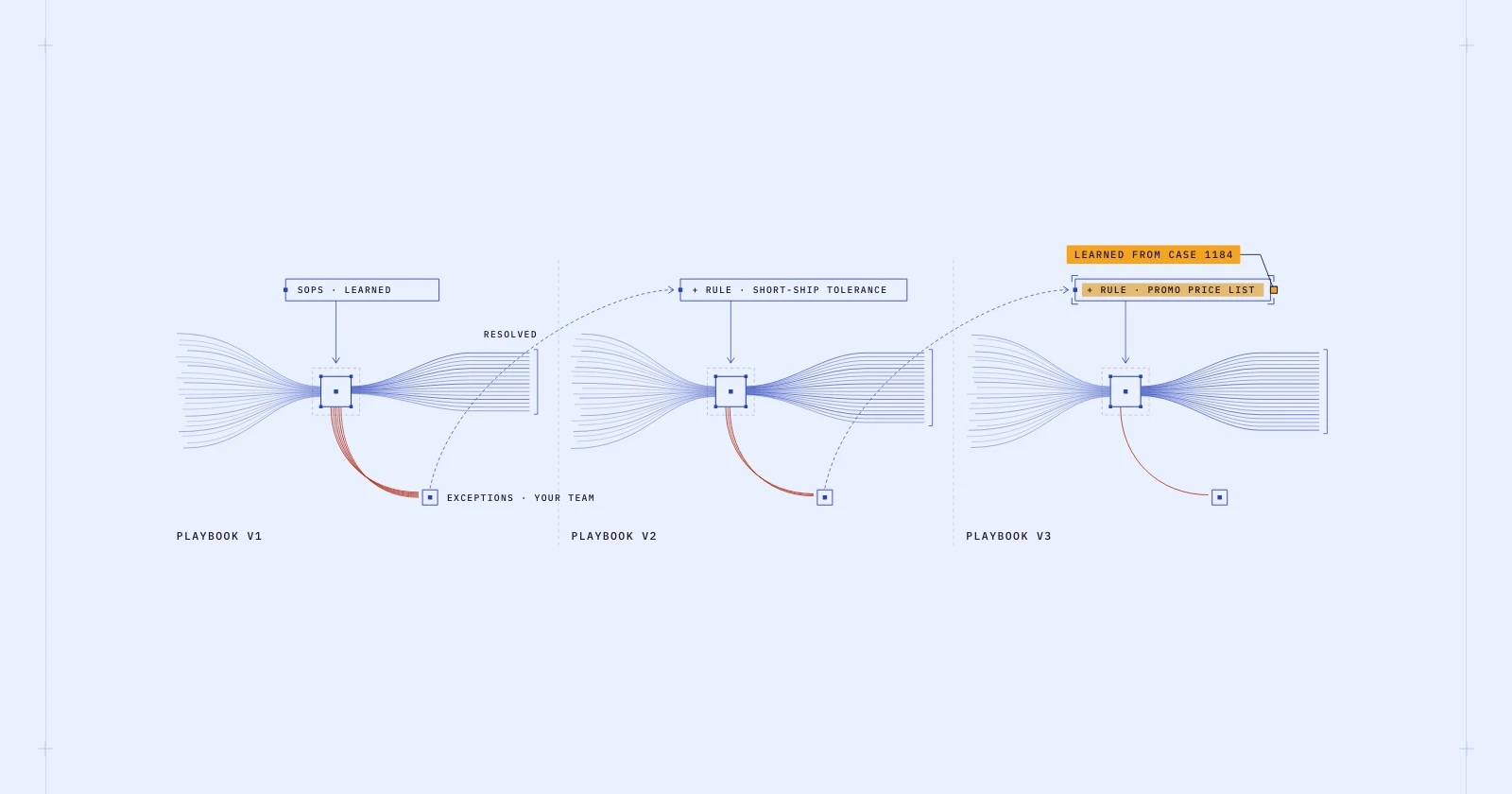
Finance Operations 17 Min. Lesezeit
9 Best AI Agents for Finance Operations in 2026
Artikel lesen
Finance Operations 17 Min. Lesezeit
9 Best B2B Customer Service Automation Tools for Manufacturers and Distributors in 2026
Artikel lesenNächster Schritt
Automatisieren Sie den Workflow hinter diesem Artikel.
Bringen Sie Ihre Dateien und Regeln mit. Cloudsquid setzt daraus in wenigen Wochen einen prüfbaren KI-Workflow um.