
Finance operations
9 Best AI Tools for Wholesale Distributors in 2026
Compare 9 AI tools for wholesale distributors: sales AI, pricing and rebates versus agents that work orders, credits, supplier invoices and statements.
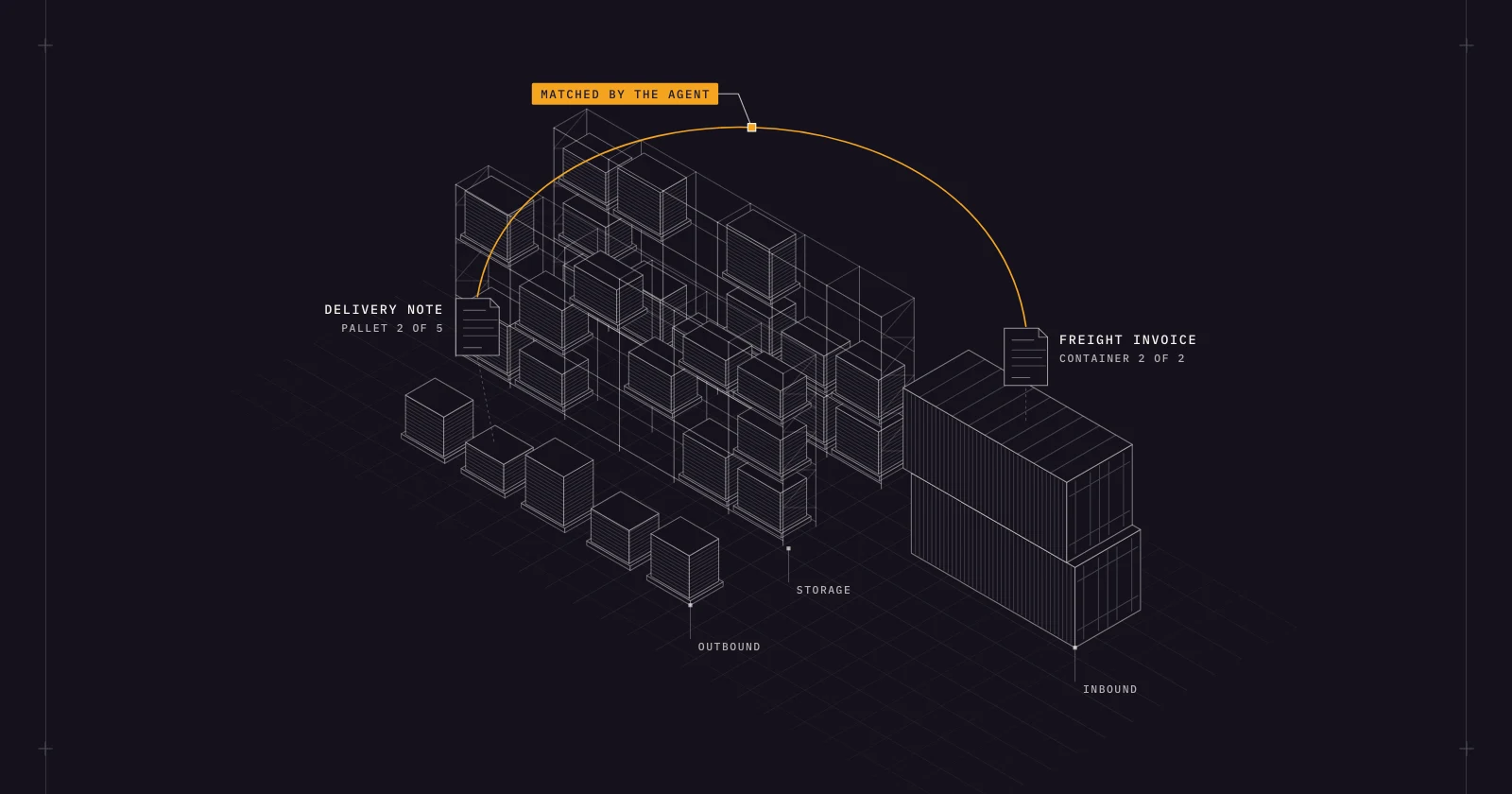
- Written by
-
 Filip Rejmus
- Published
- Reading time
- 17 min read
It is Monday morning and the orders inbox is already full. A contractor has sent a photo of a handwritten material list. A hospital group has sent a 60-line PDF purchase order that uses its own part numbers. Between them sit three credit requests, a supplier statement and an invoice that nobody has a receipt for.
Search for AI tools for wholesale distributors and you find two kinds of product under one label. The first helps a distributor sell: it tells a rep which account to call, recommends a price, drafts a quote. The second works the back office inboxes where the hours go and the margin leaks: customer orders, returns and credit notes, supplier invoices, statements.
A distributor usually needs to know which of the two problems it is solving first. The second gets less attention. MDM and NAW's 2026 survey of 426 distribution leaders covers five AI opportunity areas: pricing, inventory, customer service, sales enablement and logistics. Order entry appears under customer service. Supplier invoices, statements and credit requests are not among the five.
This post covers nine AI tools that distributors are comparing in 2026: what each one does, which side of that line it sits on, who it is built for, and how to choose. Stand-alone inventory planning and routing tools are left out.
Best AI Tools for Wholesale Distributors at a Glance
| Tool | Best for | Standout |
|---|---|---|
| cloudsquid | Back office: distributors whose orders, credit requests, supplier invoices and statements arrive by email and PDF | Agents work each message end to end against the ERP; only exceptions reach the team, with the evidence |
| Conexiom | Back office: high-volume sales order entry at manufacturers and distributors | Turns emailed purchase orders into ERP-ready data and explains every exception |
| Canals | Back office: construction and industrial supply distributors | Order entry, accounts payable and statement reconciliation in one product family |
| Workist | Back office: European manufacturers and wholesalers | Agents for emailed orders, inbox inquiries and phone orders, hosted in the EU |
| Proton.ai | Sell side: distributors that want reps to sell proactively | CRM that ranks accounts by reorder, at-risk and cross-sell signals |
| Pricefx | Sell side: margin across many SKUs and customer agreements | AI price optimization and agents that watch transactions for pricing outliers |
| Enable | Sell side (margin): large supplier and customer rebate programs | Automated accruals and claims across rebates, SPAs and ship-and-debits |
| Infor CloudSuite Distribution | Both, inside the ERP: distributors on Infor or choosing a new ERP | Distribution ERP with GenAI and AI agents built in |
| Microsoft Dynamics 365 Business Central | Both, inside the ERP: distributors on Business Central | Sales Order Agent and Payables Agent with documented review steps |
1. cloudsquid: AI Agents That Work the Distributor's Back Office Inboxes
cloudsquid is an autonomous inbox for finance and operations teams at companies that make, move and sell physical products. Every email and document that lands in a team's inbox is picked up by an AI agent and worked end to end: read, checked against the company's own records, acted on in the ERP, closed. Only exceptions reach the team, with the evidence attached.
At a distributor, that is most of the back office day: customer orders by email and PDF, returns and credit requests, supplier invoices and statements. One inbox takes every channel (email, PDFs, EDI, customer and supplier portals, Teams), and each message becomes a task with its own agent.
cloudsquid is not a CRM, a pricing engine, a rebate system or an ERP, and it will not tell a rep which account to call. It is the agent layer that does the work in the inbox, on top of the existing ERP. It connects to SAP, Oracle NetSuite, Microsoft Dynamics 365, Workday and Infor.
What makes cloudsquid different for wholesale distributors:
cloudsquid starts from the inbox instead of from a single document type. A team begins with one inbox and adds the next process without buying another tool. Agents learn the process from the company's SOPs, files, email and ERP history. The team sets the rules, approval limits and escalation paths, which are versioned and auditable, and decides what agents may do alone. When an agent cannot resolve a case, the team gets it with the evidence attached, and the resolution becomes a rule so the same exception does not come back.
There is no integration project to start. On day one the team forwards the mailbox and shares SOPs, sample cases and an ERP export. In week two agents work the inbox. Two published results: a mid-market CPG distributor cut manual order entry time by 70%, and a construction wholesaler surfaced $730K in vendor reconciliation with 90% less manual effort. cloudsquid is ISO 27001:2022 certified and offers EU data residency.
Who cloudsquid is built for:
Distributors and wholesalers whose customer service, accounts payable and finance teams spend their days keying orders, checking credit requests and matching invoices and statements by hand, and who plan to keep their ERP. A distributor that mainly needs sales recommendations, price optimization or rebate tracking should look at tools 5 to 7.
2. Conexiom: Order and Invoice Automation for the Order Desk
Conexiom has automated orders for manufacturers and distributors for more than 15 years, by its own account. Its current product, Conexiom Relay, takes the purchase orders that customers email in and returns ERP-ready data. This is the back office side, centered on the order desk. The company states that it has more than 600 customers and processes more than 1.5 billion line items a year.
Key capabilities:
- Sales order automation: Extracts order data from emailed documents, validates it against master records, normalizes units and part numbers, and delivers it to the ERP.
- Vendor acknowledgements and AP invoices: Verifies supplier pricing, availability and delivery dates, and matches supplier invoices to purchase orders.
- Intelligence Console: Lets the team see and steer what Relay learns, with instructions written in plain English.
- ERP integrations: Lists native integrations with more than 40 ERPs, including Epicor, SAP, Infor, Microsoft Dynamics 365, Oracle NetSuite and Sage.
Conexiom's standout capability: Explained exceptions on difficult orders
Conexiom's framing is that reading a purchase order is solved and that the remaining work is in the details. Relay shows the reason behind every exception in clear language so the team knows how to fix it. The company reports a 30-day average implementation.
Who Conexiom is built for:
Manufacturers and distributors with a high volume of emailed purchase orders that want sales order entry automated first. In July 2026 Conexiom announced an expanded partnership with Epicor that covers Eclipse and Prophet 21 users.
3. Canals: Operating AI for Construction and Industrial Supply Distributors
Canals describes itself as AI built for the construction and industrial supply chain, and as the "Operating AI" of more than 100 distributors. Its products cover the customer inbox (order entry, inquiry handling) and the finance inbox (accounts payable, statement reconciliation, accounts receivable, PO tracking). It sits on the back office side.
Key capabilities:
- Order entry: Turns handwritten notes, takeoffs, spreadsheets, PDFs and voice audio into a pre-built quote that a rep reviews and submits to the ERP.
- Accounts payable: Matches invoices against POs and receipts and auto-submits everything that falls within the parameters the team sets.
- Statement reconciliation: Checks vendor statements against the ERP and flags missing invoices, amount discrepancies and unused credits.
- ERP integrations: Names Eclipse, Prophet 21, Infor CSD, Infor SX.e, SAP S/4HANA and Microsoft Dynamics.
Canals's standout capability: Sales and finance documents for the trades
The contractor's material list and the manufacturer's statement are handled in one product family. The company states that customers see up to 90% time savings on sales order entry and 96% touchless invoice processing.
Who Canals is built for:
Distributors in electrical, plumbing, HVAC, industrial and building materials supply that take material lists and takeoffs from contractors and want one vendor for order entry and the finance documents.
4. Workist: AI Agents for Orders and Customer Inquiries, From Berlin
Workist is headquartered in Berlin and calls its product the agentic AI platform for sales. Its agents capture orders, answer customer inquiries and take orders by phone for manufacturers and wholesalers. It works a back office inbox: the one that inside sales and order management share. The company states that more than 250 companies use it and that its agents have handled more than 15 million transactions.
Key capabilities:
- Order Agent: Reads orders from email, PDF and Excel, checks every line item against master data and creates the order in the ERP.
- Inbox Agent: Answers status, price and availability inquiries using data from the ERP.
- Phone Agent: Takes calls, understands orders and follow-up questions, and records them as a transaction.
- ERP integrations: Names SAP S/4HANA, Oracle NetSuite and Microsoft Dynamics 365 Business Central and states support for more than 40 systems.
Workist's standout capability: European hosting and ERP coverage
Workist states that it is hosted in the EU, GDPR compliant and SOC 2 Type II audited. Its German site lists ERPs such as proALPHA, ABAS and Sage 100 next to SAP. According to the company, 60 to 90 percent of orders typically run fully automatically.
Who Workist is built for:
European manufacturers and wholesalers that receive orders and inquiries by email, PDF or phone every day. Its agents center on orders and customer inquiries, so a team whose first problem is supplier invoices or statements should compare the first three tools.
5. Proton.ai: AI CRM and Sales Recommendations Built for Distributors
Proton.ai describes itself as the only AI platform built exclusively for distributors, and it is the clearest sell-side tool on this list. Its CRM uses order history and account activity to rank sales opportunities, so a rep knows which accounts are due to reorder, which have gone quiet and where a cross-sell is likely. It has also added quote and order entry automation, which takes it into the order desk.
Key capabilities:
- Proton CRM: Ranks opportunities from order history and account activity.
- Reorder and at-risk signals: Flags reorders, accounts that have stopped buying, spending gaps and cross-sell opportunities.
- Quote and order entry automation: Reads emailed POs and RFQs, matches products, applies customer pricing and drafts quotes and orders that the team reviews before they reach the ERP or the customer.
- ERP connections: Names Epicor P21, Epicor Eclipse, Infor SX.e and NetSuite, and states that the ERP remains the system of record.
Proton.ai's standout capability: Recommendations built on distribution buying patterns
Proton.ai says its own models, trained for distribution, use buying history to identify reorder opportunities. Among the customer results it publishes is 72% more sales per inside rep at one distributor.
Who Proton.ai is built for:
Distributors whose growth problem is rep productivity: long account lists, reactive order taking, and cross-selling that depends on what each rep remembers. Proton.ai lists industrial and MRO, electrical, HVAC/R and plumbing, safety, jan-san, medical and building materials among its industries.
6. Pricefx: AI Price Optimization and Margin Control
Pricefx is a pricing platform founded in 2011, with offices that include Prague, Chicago, Paris and Pfaffenhofen in Germany. It is the classic category tool for one sell-side problem: what price to charge, to whom, with which approval. Zilliant is another pricing platform that names manufacturers and distributors as its customers.
Key capabilities:
- AI Optimization: Analyzes customer behavior, market conditions, pricing objectives and willingness to pay.
- Quoting: Gives inside sales and field reps guided pricing, discount boundaries and approval logic.
- Agreements and Rebates: Keeps customer-specific pricing and agreements in a single source of truth and automates rebate calculations.
- Agents: Monitor customer and transaction data, look for pricing outliers and recommend corrective actions.
Pricefx's standout capability: Consistent pricing across branches
Pricefx says it maintains pricing consistency across branches while giving local teams the flexibility to respond in their markets. It launched its Agents in 2025 and states a catalog of more than 125 agent templates.
Who Pricefx is built for:
Distributors with a pricing team, or the intent to build one, that manage many SKUs, customer agreements and frequent supplier cost changes. Its subject is price and margin. The order desk and the finance inboxes are a separate purchase.
7. Enable: Rebate and Pricing Program Management
Enable is a pricing and rebate management platform. For a distributor the core is rebates: the supplier rebates it earns and the customer rebates it pays, plus special pricing agreements (SPAs) and ship-and-debits. It sits with the commercial tools, next to pricing. It protects margin that has been negotiated and is easy to lose in spreadsheets.
Key capabilities:
- Rebate calculations and accruals: Automates them so earnings and payouts reflect the agreed terms and stand up to audit.
- Claims: Automates eligibility, accruals and claims across rebates, SPAs and ship-and-debits.
- Agreement tracking: Tracks performance against every agreement in real time so no eligible rebate is left unclaimed.
- Integrations: Brings in data from ERPs and financial systems, naming SAP, Microsoft Dynamics 365, Oracle NetSuite and Sage.
Enable's standout capability: One record for every rebate agreement
Enable describes its platform as a single commercial system of record that flags discrepancies between contracts, price files and transactions. A central hub lets a distributor and its trading partners align on terms and performance.
Who Enable is built for:
Distributors with enough rebate volume that spreadsheets miss money: many supplier agreements, buying group programs, SPAs to claim back.
8. Infor CloudSuite Distribution: Distribution ERP With AI Agents Inside
Infor is a different kind of entry: it is the ERP itself. The company offers cloud suites for distributors of any size and says more than 4,000 distribution companies use Infor. Its AI comes with the suite, so it touches both sides of the distinction: quoting and pricing on the sell side, document processing and finance in the back office.
Key capabilities:
- AI agents: Infor describes agents that work across ERP, warehouse management and demand forecasting. Its October 2026 release adds agents for inventory, quoting, finance, procurement and pricing, among others.
- AI document processing: Converts requests for quote, purchase orders and PDF files into quotes or ERP-ready orders, according to the same release.
- Infor GenAI: Built into the distribution software to automate product attributes and translations.
- Velocity Suite: An AI package that pairs with every Infor CloudSuite and bundles agents, GenAI, process mining and automations for a flat fee.
Infor's standout capability: AI on the ERP's own data
An add-on reads from and writes to the ERP through an integration. Infor's agents work inside the system that already holds pricing, inventory and purchasing, and the company says they coordinate work across quoting, purchasing, order entry and accounting.
Who Infor CloudSuite Distribution is built for:
Distributors that run Infor CloudSuite Distribution, and distributors selecting a new ERP that want AI to be part of that decision. On another ERP, choosing Infor means replacing the ERP, a larger project than adding an agent layer on top.
9. Microsoft Dynamics 365 Business Central: Copilot and Agents Inside the ERP
Business Central is Microsoft's ERP for small and midsize businesses. Microsoft documents two kinds of AI in it: Copilot, an assistant that works alongside the user, and agents, which it describes as autonomous AI workers whose work stays transparent and reviewable. Two agents map onto a distributor's inboxes, one for customer orders and one for vendor invoices.
Key capabilities:
- Sales Order Agent: Monitors a mailbox, analyzes customer requests, finds the customer, checks item availability and prepares a sales quote or order.
- Payables Agent: Monitors a mailbox for vendor invoices and credit notes, extracts the details, proposes matches to purchase order lines and prepares a draft for review.
- Sales line suggestions: Copilot identifies matching line items from a few words, a pasted conversation or an uploaded file.
- Bank reconciliation assist: Copilot proposes matches between bank statement transactions and ledger entries.
Business Central's standout capability: Documented guardrails
Microsoft's documentation states what each agent does and where it stops. The Sales Order Agent always creates a quote first, and designated users approve all outgoing messages. The Payables Agent produces an unposted purchase invoice or credit memo and does not post it. Microsoft also lists current limits, for example that the Payables Agent only processes emails with PDF attachments.
Who Business Central is built for:
Distributors that run Business Central and whose volumes and document types fit the documented limits. Check Microsoft's availability list for your country and language first.
How to Choose the Right AI Tools for a Wholesale Distributor
These nine tools do not compete for the same budget line. Answer four questions about your own business before comparing vendors.
1. Are you trying to sell more, or to stop losing hours and margin in the back office?
If rep productivity is the constraint, look at Proton.ai. If it is the price on the order, look at Pricefx. If earned rebates go unclaimed, look at Enable. If it is the queue of orders, credit requests, invoices and statements, look at cloudsquid, Conexiom, Canals and Workist. When customer service already spends the morning keying orders, more sales recommendations add volume to a full queue.
2. Which inboxes are in scope?
For customer orders alone, Conexiom, Workist, Proton.ai's order entry automation and the Business Central Sales Order Agent are built for the job. For orders plus supplier invoices and statements, Canals and cloudsquid cover both. If returns, credit requests, deductions and freight invoices sit in the same team's day, cloudsquid runs those inboxes on one platform.
3. Which ERP do you run, and are you keeping it?
On Infor or Business Central, test what the ERP includes first. On Prophet 21, Eclipse or SX.e, check the integration lists: Canals and Proton.ai name all three, and Conexiom names Eclipse and Prophet 21. On SAP, Oracle NetSuite or Microsoft Dynamics 365, cloudsquid, Workist and Conexiom all list integrations. Ask every vendor to show an order written into your ERP with your own customer part numbers.
4. What may the AI do alone, and who reviews the rest?
Proton.ai states that the team reviews every drafted quote and order. Canals has reps review quotes and auto-submits invoices within set parameters. Microsoft's Payables Agent stops at an unposted document, and its Sales Order Agent has users approve every outgoing message. Workist reports that 60 to 90 percent of orders typically run fully automatically. With cloudsquid the team decides what agents may do alone, and every case keeps a full evidence trail.
What Good AI for Wholesale Distribution Looks Like in Practice
Go back to the Monday inbox. With good back office AI, the contractor's handwritten list is a draft order with matched items. The 60-line purchase order is in the ERP with the customer's part numbers translated. Each credit request has been checked against the original invoice and the delivery record. The supplier statement has been compared line by line with the ERP.
People see the cases that failed a check, with the reason and the documents attached. That is the test of any tool here: what happens to the exception. A tool that extracts fields and hands every unclear case back has moved the typing and left the thinking with the team.
On the sell side, good looks different. A rep opens the day with a ranked list of accounts and a reason for each call. A quote goes out at a price inside the guardrails. Supplier rebates are claimed in full.
The two sides meet on the order. A price recommendation only earns its margin if the order is entered at that price, and a credit note issued without a check gives part of it back. A distributor with a full order desk should fix the back office first. One with a quiet order desk and flat sales should start on the other side.
Frequently Asked Questions
What are AI tools for wholesale distributors? They are software products that use AI to do or support work specific to distribution: sales recommendations, pricing, quoting and rebate management on the sell side, and customer orders, returns and credit notes, supplier invoices and statements in the back office. ERP vendors such as Infor and Microsoft now include both kinds inside the ERP.
What is AI order entry for distributors? AI order entry reads the purchase orders that customers send by email, PDF, spreadsheet or photo, matches the customer and the items to the distributor's records, and creates the quote or order in the ERP. Unclear lines go to a person. Conexiom, Canals, Workist, Proton.ai, the Business Central Sales Order Agent and cloudsquid all handle it.
What is the difference between sales AI and back office AI in distribution? Sales AI aims at revenue and margin per customer: it tells reps where to spend time and what price to quote. Back office AI reduces the hours and the errors in processing what customers and suppliers send.
Does AI for distributors work with Prophet 21, Eclipse, SAP, NetSuite or Dynamics 365? Check each vendor's integration list. Canals and Proton.ai name Prophet 21, Eclipse and Infor SX.e. Conexiom lists native integrations with more than 40 ERPs. Workist names SAP S/4HANA, Oracle NetSuite and Business Central. cloudsquid connects to SAP, Oracle NetSuite, Microsoft Dynamics 365, Workday and Infor.
How long does it take to implement AI at a distributor? Inbox tools are measured in days or weeks. Conexiom reports a 30-day average and Canals a few days of technical implementation on common ERPs. cloudsquid is live in two weeks: the mailbox is forwarded on day one, rules and the ERP mapping are set up in week one, and agents work the inbox in week two. Pricing, rebate and ERP projects are larger because they depend on master data and more teams.
What ROI can a distributor expect from AI? Back office results show up as hours saved and money not lost, such as the 70% cut in manual order entry time at a mid-market CPG distributor that works with cloudsquid. Sell-side vendors report revenue per rep and margin. Ask every vendor for a result from a distributor of your size and trade, and for the method behind the number.
Do we lose control when AI agents enter orders or process invoices? Not if the tool is set up with clear limits. The inbox tools on this list keep people involved in some form: reviewed drafts, tolerances, approval steps or exception queues. With cloudsquid, the team sets the rules and approval limits and can audit every case. To see it on a distributor's inbox, book a demo.
Related Comparisons
About the author
Co-founder & CPO, Cloudsquid
Filip Rejmus, co-founder and Chief Product Officer at cloudsquid, is building infrastructure to help companies manage, scale, and optimize AI workflows. With a background spanning software engineering, data automation, and product strategy, he bridges the gap between AI research and building useful, friendly Products.Before founding Cloudsquid, Filip worked in engineering and data roles at Taktile, SoundHound, and Uber, and contributed to open-source projects through Google Summer of Code. He studied Computer Science at TU Berlin with additional coursework in Quantitative Finance at TU Delft and Computer Graphics at UC Santa Barbara.
Keep reading
More useful pieces for your team.
Finance operations 17 min read
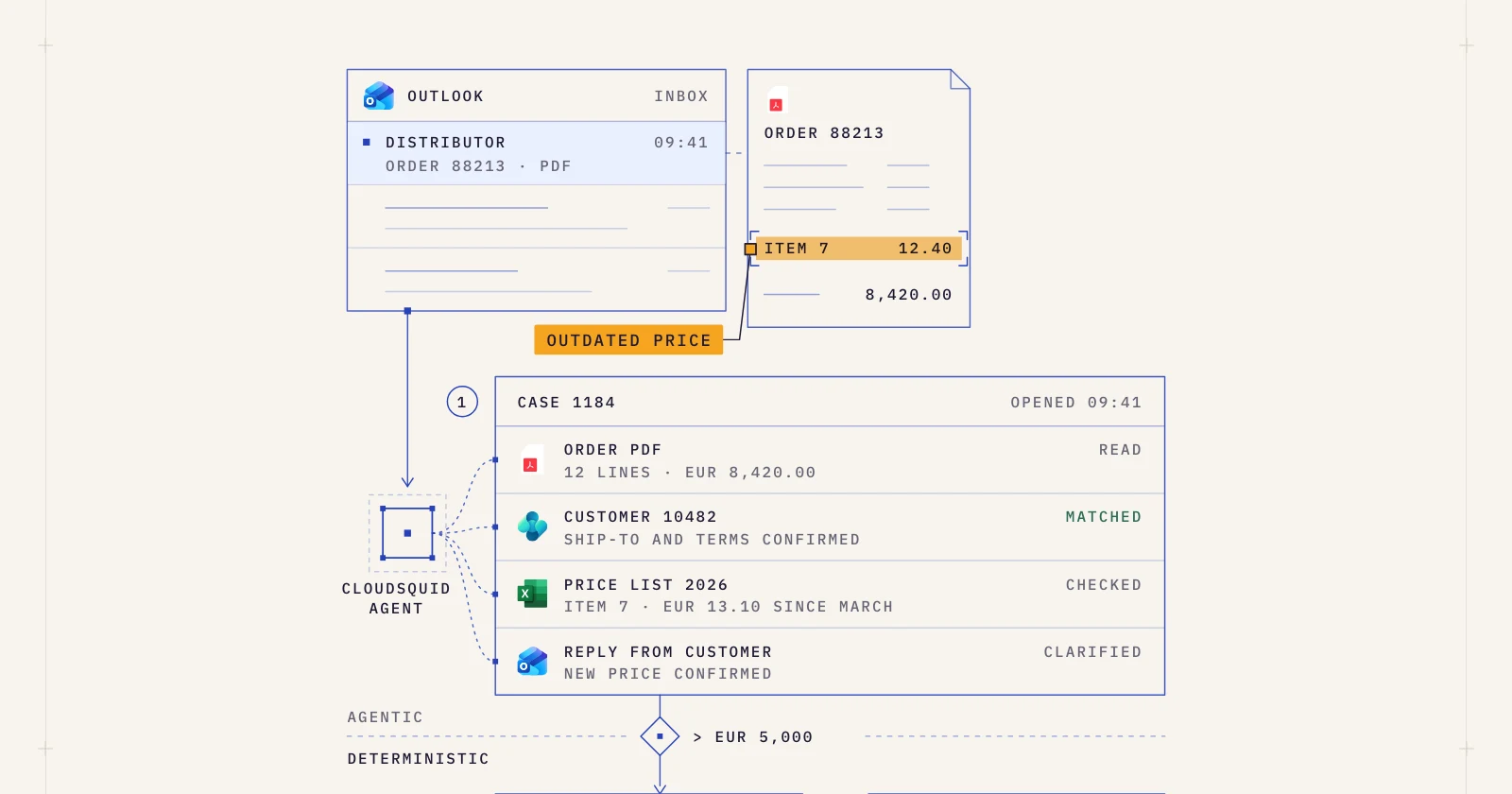
9 Best Sales Order Automation Software Tools for 2026
Read article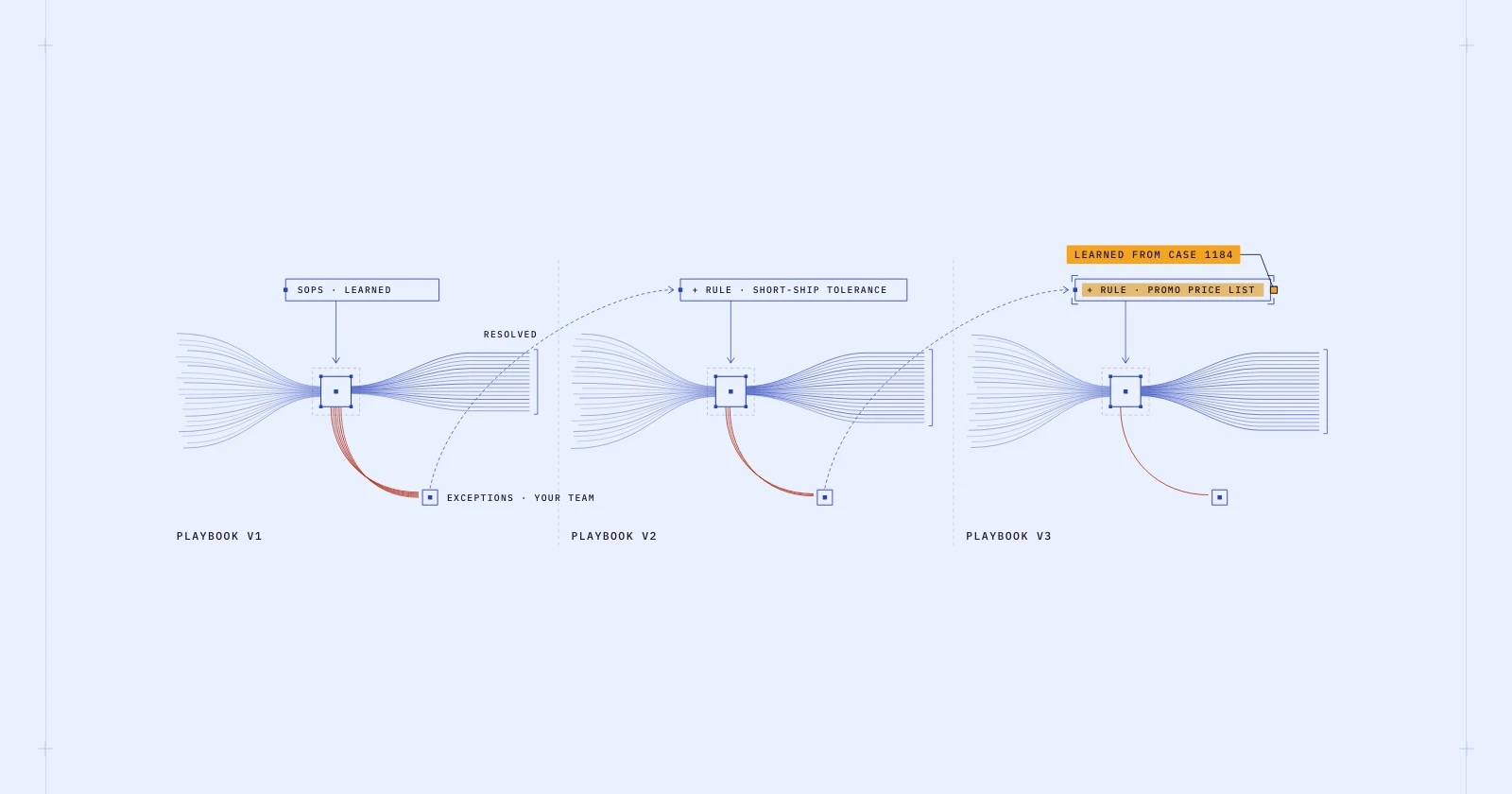
Finance operations 17 min read
9 Best AI Agents for Finance Operations in 2026
Read article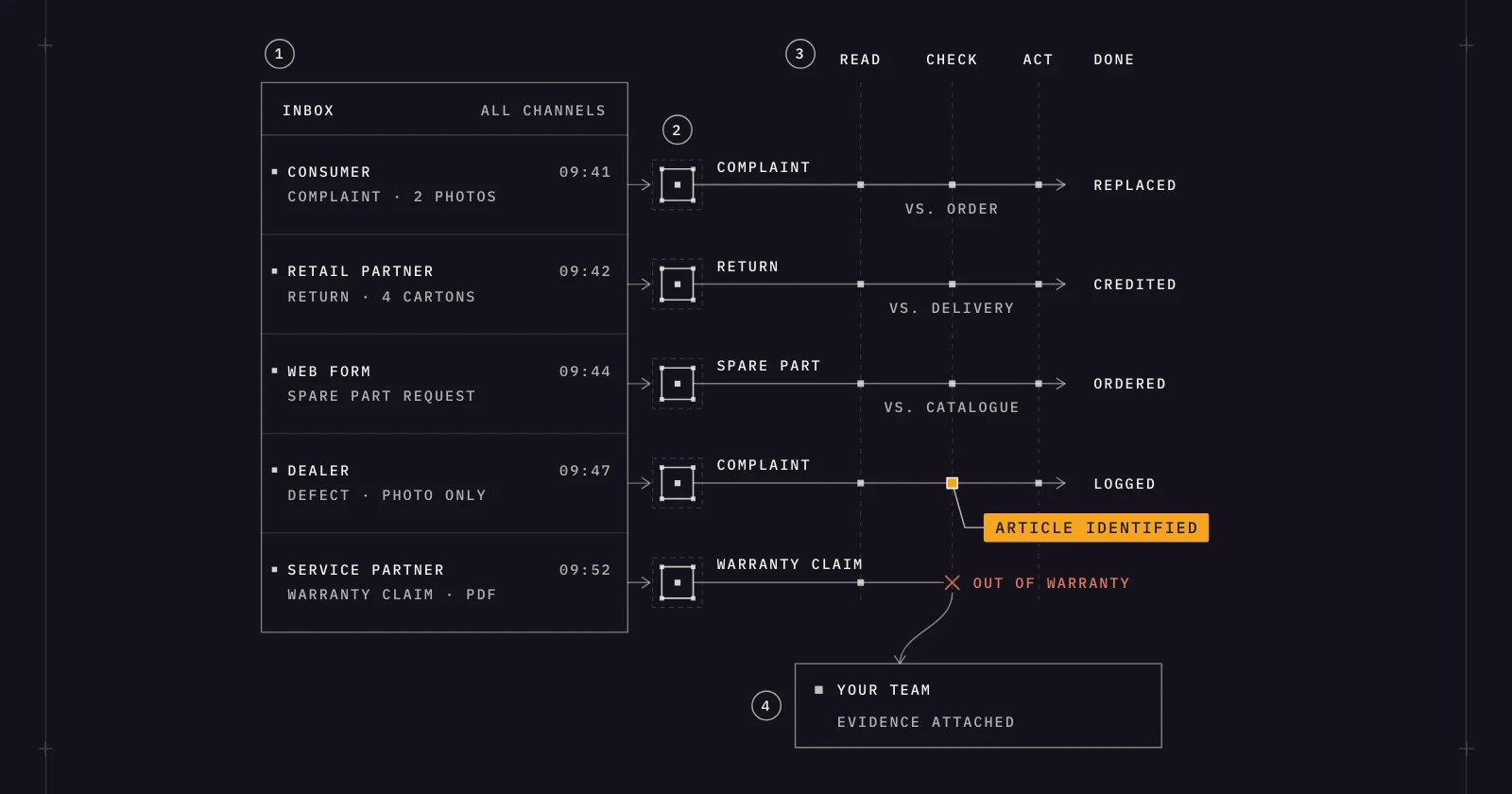
Finance operations 17 min read
9 Best B2B Customer Service Automation Tools for Manufacturers and Distributors in 2026
Read articleNext step
Automate the workflow behind this article.
Bring your files and business rules. Cloudsquid turns them into an auditable AI workflow in weeks, not quarters.